When it comes to the immediate problems threatening Piedmont’s schools, California’s "last hired, first fired" policy regarding teacher layoffs does not make the list, according to one school board member.
What’s most frustrating as the Piedmont Unified School District prepares for the 2011-2012 academic year, says Rick Raushenbush, is the state’s flagrant inability to deliver promised funds for education.
“Imagine trying to plan class sizes and offerings, and the number of teachers and staff needed to provide them to students, when you do not know when or if you will receive up to 20 percent of the amount that Proposition 98 'guarantees' a district as the 'floor' for state funding,” wrote Raushenbush in an email response to Piedmont Patch’s questions about the effects of the state’s "last hired, first fired" policy on PUSD.
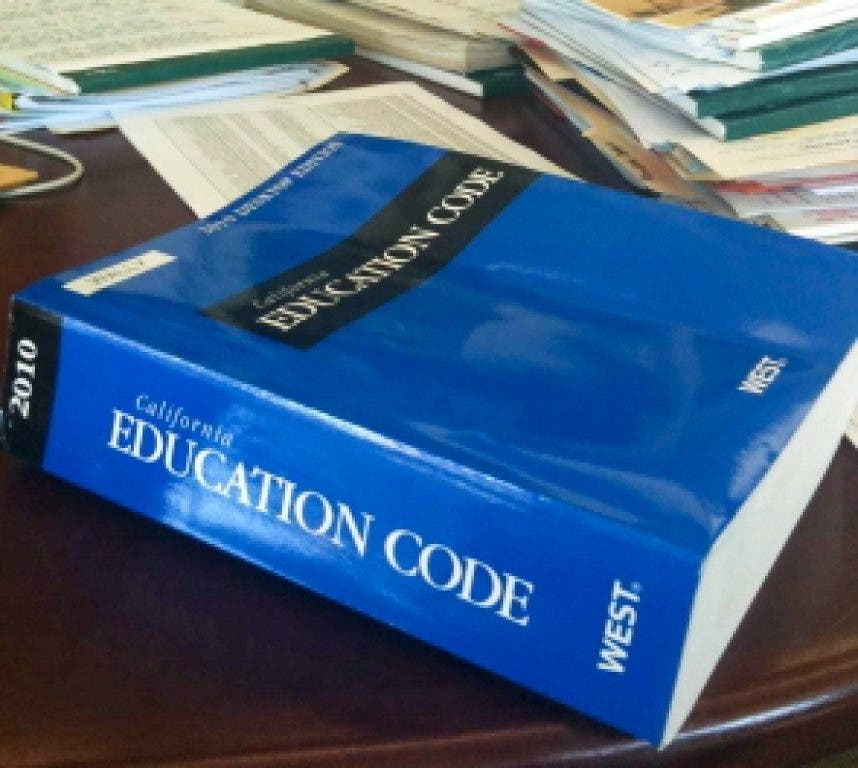
Piedmont resident to end the policy in California. Pech feels it's one of the most significant detriments to a child’s education and that Piedmonters should be on board to change California’s Education Code.
Although Raushenbush agrees that the contentious policy “can have distressing results in certain circumstances and in some school districts,” Piedmont is not one of those districts.
In recent years, as school districts have cut back in the midst of economic crisis, . In Piedmont, the fraction of educators with two years of experience or less has fallen from 4.9 percent in the 2005-2006 school year to 2.2 percent in 2009.
PUSD's school board authorized a reduction of the equivalent of 4.4 full-time certificated positions for the upcoming school year. First and foremost, Raushenbush notes, where that ax falls will be determined by the "particular kinds of service" designated for the cuts–i.e. the decision to shrink programs including elementary school music, middle school counseling services, and high school math.
Once the decisions on which programs to trim are made, if PUSD is then forced to hand out pink slips, it does so based on seniority.
"In many cases, the 'first hired' is likely to be the 'last fired'," Raushenbush wrote about the consequences of the school district's compliance with the Ed. Code requirements.
“On the whole ... I would prefer that the district be allowed to consider more than seniority in deciding which teachers to retain."
How to identify the most effective teachers and encourage them to share their techniques is being considered by PUSD's new Evaluation Committee.
"Because the vast majority of teachers in Piedmont are very good to excellent, we are focused on further improvement rather than how to conduct layoffs," Raushenbush said.

enactment of the Budget Act and August 15 of the fiscal year to which that Budget Act applies if the governing board of a school district determines that its total revenue limit per unit of average daily attendance for the fiscal year of that Budget Act has not increased by at least 2% and if in the opinion of the governing board it is therefore necessary to decrease the number of permanent employees in the district. This bill would make this provision inoperative from July 1, 2011, to July 1, 2012, inclusive." The full text of the bill is here: http://www.leginfo.ca.gov/pub/11-12/bill/asm/ab_0101-0150/ab_114_bill_20110630_chaptered.html
The real problem is the ingrained teacher salary schedule, where merely by taking a few summer school classes and living another year, a teacher marches up the salary chart to a point where the long-tenured teacher makes a very sizable per-day salary considering the 180-day work-year. Municipal employees make comparable annual salaries for a 230-day +/- work year. How this greater problem can be attacked will take a lot more than a citizen's efforts. Thank you, Michael Henn
I do believe that in teaching as in any other professions experience counts. This is very true for poor school districts, where class management skills are very critical to a teacher's effectiveness. With regard to pay, below is the opinion of Richard, a cousin of my wife who is retired after 25 years teaching in San Ramon, a school district with demographics similar to Piedmont (and a few years in Oakland). Richard has a master's degree from UC Berkeley and taught Spanish, English and Math. I talked with him about a week ago, and he agrees that I could make his opinions public. I do not know to what extent, his opinion is valid for PUSD. I will publish my full interview with him in another posting. "Since around 1980, all teachers must renew their credentials every five years. Teacher's pay is set in the district contract strictly based on seniority, advanced degrees (M.A., Ph. D.), the number of university credits earned beyond undergraduate degree (professional development credit) and credentials. So to get better pay, many teachers earn professional development credits at states colleges. When Richard was working, most professional development credits were earned in methods courses, and not in content areas such as history or biology. Many teachers did not keep up on content, they just took methods courses which were easy to pass. In Richard's opinion, it should be a matter of balance between the two areas." Bernard Pech
Imagine a large school district in a poor community with a school board and a superintendent asleep at the wheel. - Unless officially notified by March 15 of his/her second year, every temporary certified teacher automatically acquires tenure as per California Education Code section CED 44929.21. - The default procedure to dismiss a tenure employee as per the CED is many pages long (refer to section 44930-44988) and has many restrictions protecting the employee. However this section is often superseded by even more stringent conditions stated in a collective bargaining agreement, which can result in the impossibility of dismissing any employee for unsatisfactory performance. As an example, take a look at: http://tinyurl.com/6a656au refer to section 4, Evaluation Procedure, pg 32). - Under lifo, the problem of selecting which discipline to trim is very complicated for an administration trying to retain its most effective teachers. Some teachers are credentialed in more than one subject, and if bumped from one discipline they can bump another teacher if they have more seniority on his/her discipline. After several years of bad management by a school board and a superintendent and the accumulation of many problems, how can a new administration turn a district around under such rules?
http://online.wsj.com/article/SB10001424052702304203304576448181206833902.html